I was recently speaking with an architectural millworker who has been getting into general contracting. Out of nowhere, he said, he’s getting a ton of leads for GC work — which he wants! — but he has no idea where they’re coming from. He hasn’t promoted his GC work at all and doesn’t even mention this capability on his website. He wanted to know: how are these leads finding him?
The first thing I did was pull up ChatGPT and ask what it knew about his company. Sure enough, ChatGPT said the company was a general contractor that specializes in architectural millwork. How did it know?
I looked at the citations. The answer engine was pulling not from the company’s website but from (1) a state-run database of licensed contractors that simply said there was a GC license in good standing and (2) several unclaimed profiles with aggregators in the industry.
ChatGPT was telling people an incomplete story. In this case, it happened to work out in the architectural millworker’s favor in the short term, but even with an influx of good leads, the AI answer engines were completely missing his larger brand story. And with more and more B2B purchase decisions now starting inside an AI answer engine, most business owners I know wouldn’t want to leave this channel up to chance.
Do you know what AI answer engines are saying about your brand? If not, it’s time to find out. Understanding and attempting to influence answer engines like ChatGPT, Perplexity, and Gemini is called answer engine optimization (AEO) and like SEO, it begins with asking the right questions.
Questions to Ask AI Answer Engines to Test for Accuracy, Sentiment, and Story
To understand what answer engines might say, ask the answer engines themselves.
Start by opening an incognito browser window and heading to your answer engine of choice. The incognito window is important! If you are an answer engine user, your logged-in account will use the memory it has about you to inform its answers. We want as neutral a test as possible.
Ask the following questions:
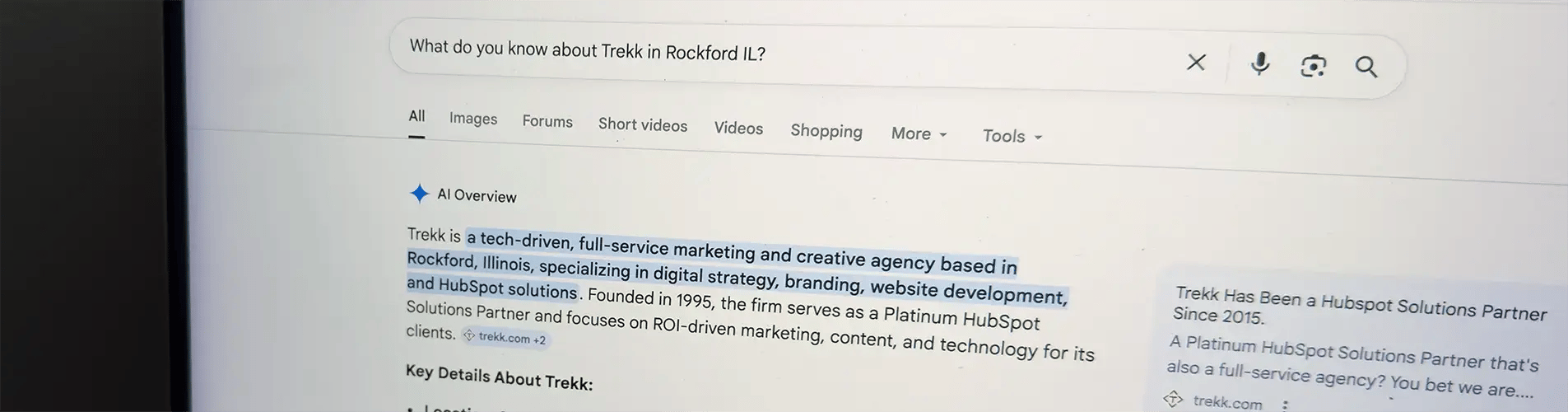
- What do you know about [company]?
- What [products/services] does [company] provide?
- What are the pros of [working with/buying from] [company]?
Then ask yourself:
- What’s missing?
- What’s incorrect?
- What’s incomplete?
Even if the answers are accurate, do they tell the full story? AI answer engines are good at summarizing, but they can miss nuance. And, importantly, they’re only as good as the data they pull from.
Questions to Ask AI Answer Engines to Uncover Objections
Next, ask these questions:
- What are the cons of [working with/buying from] [company]?
- Who are [company]’s top competitors and what do they offer that [company] doesn’t?
- If I go with [company] over [competitor], what are my biggest risks?
These are real questions your prospects may be asking AI answer engines, and now you have some insight that will help you proactively address them.
Questions to Ask AI Answer Engines to Simulate Your Actual Customer Journey
This time, instead of naming your own company, think of questions where you would want your brand to be the answer.
- Which company should I work with for [service]?
- What are the top-rated companies in [industry]?
- Which company is best at servicing [niche]?
Test these prompts and see if your company is mentioned or cited. A mention is when your brand name comes up in the answer engine’s answer. A citation is when the answer is actually coming from your content, and the answer engine links back to your website. AEO strategies go after both.
Study the Citations
Where is the AI answer engine getting its information? Open up each citation in a new window and study it. Is it positive, negative, or neutral about your brand? Do you need to take any action? If you don’t love what you’re seeing, you have options.
Types of Citations and How to Influence Them
Owned Content
Here is where you have the most control. If AI answer engines are picking up information from your owned channels — think your website, social media profiles, and YouTube channel — that doesn’t feel right, edit it. If your owned channels aren’t being cited at all, working on building them out with the types of content AI answer engines like, such as FAQs. Like SEO, AEO is a strategic play, but many marketers are seeing quicker results with AEO because every new answer is totally tailored to the prompter.
Unclaimed Listings or Profiles on Review Sites
While you can’t control the reviews themselves, claim the listing and add on-brand content and images. If appropriate, consider responding to reviews.
Reddit or Other Forums
Answer engines love quoting Reddit! While you can’t change what Reddit users have said about you, you can certainly join in on the conversation. My advice to clients is to treat Reddit like a social channel, because it is. That said, Reddit has a specific culture and interacting there is quite different from other platforms. Make sure you send someone in who can authentically engage.
Encyclopedias like Wikipedia
AI answer engines also love trusted sources like Wikipedia. If your brand meets Wikipedia’s strict notability standards and you don’t already have a page, you could and should create one. Most brands don’t clear this bar, though.
News Sites like The New York Times, AP, and Forbes
Earned media is more important than ever before. AI answer engines lean heavily on trusted news sites, so positive brand coverage there will help your AEO.
Tracking Specific Prompts, Mentions, and Citations
Obviously testing multiple answer engines every day with dozens of prompts to see how your AEO is improving is not scalable. If you plan to invest in an AEO strategy, I would recommend using a purpose-built tool to track prompts, mentions, and citations over time. Semrush recently added an AI visibility toolkit, which we’ve experimented with. With HubSpot’s purchase of Xfunnel, HubSpot’s AEO functionality has made impressive strides. My advice is to try to use a platform where you’re already working to prevent data silos.
In the meantime, this simple AEO brand audit is free to do. See what it tells you, and if you want to talk strategy, you know where to find us.